Voluntary Confessions, Absence of Psychosis Pivotal to Negating Mental Health Claims
New York – Thirty-seven years after Etan Patz disappeared, the mystery of his disappearance was finally solved with Tuesday’s jury conviction of Pedro Hernandez for the six-year-old’s kidnapping and murder. The verdict highlights complex horizons at the psychiatric-legal interface, and the enduring importance of history as the best evidence of all.
The criminal case in the iconic New York tragedy focused intensely on confessions made and attributed to Mr. Hernandez, and whether his psychiatric diagnoses and mental makeup could have influenced him to confess to a crime he did not commit.
The defendant was arrested in May 2012 and confessed to police after several hours of questioning. He also had confessed many years earlier, in public prayer before church peers, to his ex-wife, and to a friend.
The Hernandez defense presented the opinion of psychiatrist Dr. Michael First, who asserted that Mr. Hernandez had schizotypal personality disorder – which the defense termed a major mental illness. Based on that opinion and the defense presentation of forensic psychologist Dr. Bruce Frumkin’s interpretation of psychological testing, the defense charged that Mr. Hernandez had difficulty distinguishing fantasy from reality. Because of this, argued the defense through forensic psychologist Dr. Gisli Gudjonsson, his confessions were so unreliable that the jury should disregard them as evidence.
To study these assertions, the Manhattan District Attorney’s Office retained Dr. Michael Welner, Chairman of The Forensic Panel and Clinical Professor of Psychiatry at Mount Sinai School of Medicine. Dr. Welner has, for both prosecutors and defense attorneys in many different jurisdictions, examined a number of the most precedent-setting cases in disputed confessions.
In this matter, Dr. Welner concluded that the confessions made many years earlier to people in the community and in prayer were not borne of mental illness, and Mr. Hernandez was neither attention-seeking nor attached psychologically in any pathological way to the highly publicized Patz appearance. As such, there was no evidence available from any time after his arrest that was consistent with proven false confessions.
Further investigation into Mr. Hernandez’ confessions, past and present, yielded Dr. Welner’s conclusions that Mr. Hernandez harbored a nagging guilt, and sought religion, but did not want to expose himself to arrest. He made an admission to a friend during a completely rational period and then dismissed further discussion. And then, on separate occasions in the early 1980’s in which he was engaged in intense religious experiences, Mr. Hernandez viscerally and emotionally volunteered admissions to killing a boy. These confessions occurred in a public confessional and later, to the woman he wanted to marry following a shared prayer and her personal admissions to him. None of these experiences were accompanied by psychiatric symptoms, and none of these confessions were ever retracted.
Mr. Hernandez benefitted from continuing secrecy of these confessions, which he anticipated. As such, he lived quietly in New Jersey while a New York County cold case unit maintained hope that one day the case would be solved. But others close to him knew of the confessions and were haunted in their own silence. In spring 2012, when police investigation of a potential lead was publicized, Mr. Hernandez’ own close relative, who had long before tied the admission to Etan Patz, called the New York Police Department.
After a careful investigation that included the interview of others who were familiar with the confessions, including a witness at the prayer meeting, Mr. Hernandez was questioned. Police interviewing him did not disclose what they knew, but made it clear that they were interviewing two people to whom Mr. Hernandez had long ago confessed. These witnesses included Mr. Hernandez’ ex-wife. She recounted the confession of years earlier, and identified Etan Patz’ photo as identical to one she found in a small private box of her ex-husband’s personal affairs. Once he knew his ex-wife and friend were speaking to police, Mr. Hernandez confessed to police. He followed that confession up with numerous confessions, including a lengthy statement to Dr. Welner over the course of their 16.5 hours of recorded interviews. Dr. Welner’s conclusions relating to twenty-two questions of the Hernandez examination were chronicled in a 171 page report the psychiatrist filed in April 2014.
The case proceeded to trial in 2015. The jury could not reach a unanimous verdict about whether Mr. Hernandez was guilty beyond a reasonable doubt, with one holdout juror remaining after nearly three weeks of deliberation. The case was then retried for a second time in 2016 and concluded with this week’s verdict.
At retrial, the defense presented again as witnesses psychiatrist Dr. First and forensic psychologist Dr. Frumkin, who asserted the earlier noted arguments of diagnosis and infirmity based on psychological testing and its interpretation. Dr. Welner, called in rebuttal, testified about the forces behind both true and false confession, as well as the islands of knowledge informing the assessment of disputed confessions.
Notably to this case, false confessions to major crimes made in the absence of police interrogation originate in highly psychotic individuals, attention seekers, those pathologically identified with a case, or those covering for a loved one. Despite more recent claims of Mr. Hernandez’ visions, and the possibility that he did experience them, there was no evidence that Mr. Hernandez had difficulty discerning reality from fantasy, no history of delusions, no history in the years approximating the Patz disappearance and the earlier confessions of hallucinations, and in short, no active mental illness – at all. Mr. Hernandez’ history was consistently marked by his shying away from attention. And by his own account, Mr. Hernandez did not fixate on the case nor pay it mind – once he believed he would be forgiven for his church confession – until it re-emerged as an active investigation in 2012.
Dr. Welner also testified about inconsistencies in the defendant’s statements and how his confession to police followed the calculus found in other suspects who choose to confess when confronted with the strength of evidence (such as other witnesses). A murder suspect who confesses may be the only person remaining from the scene, and retains the opportunity to be the only informant available to police. This gives a suspect an opportunity to present a statement in ways that make the crime more impulsive, less callous, to suggest that he does not remember things he does, to thwart questioning about other aspects of the crime, and to redirect police away from other remaining evidence or witnesses. Details may not match, but track a suspect’s efforts to manage the impression of the examiner.
Notes Dr. Welner, “The motivation of a person facing charges like murder to manage the impression of his questioner or his examiner is always going to be greater than the skill of that questioner to discern exactly what is self-serving and what is not. It is a mistake to presume that a suspect stops trying to portray himself in the most helpful light possible simply because he chooses to confess,” he adds.
Dr. Welner also reviewed the diagnostic issues and pointed out that while the defendant was personality disordered, his pathology primarily related to his intense anger, volatility, and mood instability – not symptoms of schizotypal personality but more reflective of borderline and antisocial features.
Prosecutors later called forensic psychologist Dr. Scott Bender to review psychological testing and inform the jury of evidence that Mr. Hernandez was faking mental illness, both at Bellevue Hospital during his testing and in later assessments. Ultimately, the jury unanimously agreed that Mr. Hernandez was guilty beyond a reasonable doubt.
The topic of disputed confessions, which include false confessions, has sparked interest because of wrongful convictions stemming from false confessions. The science underpinning the area, however, remains limited and easily misunderstood.
The issues are easily misunderstood because testimony on false confessions is often highly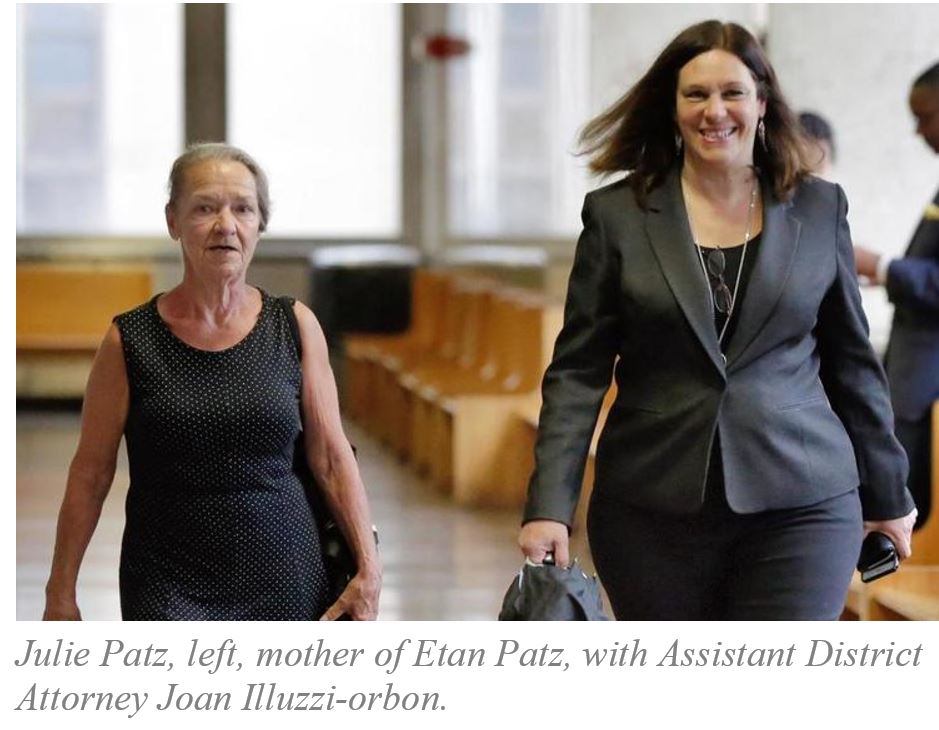 misleading, not borne of science, or attempts to exaggerate the frequency of this rare phenomenon. “It takes highly competent attorneys to digest and work with often inscrutable evidence relevant to disputed confessions, and critical thinking of jurors to see through argument for argument’s sake,” Dr. Welner noted. “Prosecutors Joan Illuzzi-orbon, Joel Seidemann, James Winocur, and Penny Brady are outstanding public servants who studied the arcane aspects of this area to understand how to present confession evidence ethically and accurately. It was a pleasure to inform them of whether, when and how the evidence related to the merits of the case. I appreciate the trust of District Attorney Vance and the Manhattan DA’s office and salute the measured and exacting scrutiny that they demanded for the Hernandez investigation. It is a model for complex casework. Above all, I wish the entire Patz family comfort in the place of mourning.”
Ultimately, the potency of evidence that Mr. Hernandez killed Etan Patz derives from confessions he volunteered in the privacy of prayer, to God, from whom he sought forgiveness. Historically, false confessions in those without major illness or the above problems have not been identified from prayer. Why? “You don’t lie to God if you want forgiveness,” explains Dr. Welner.


