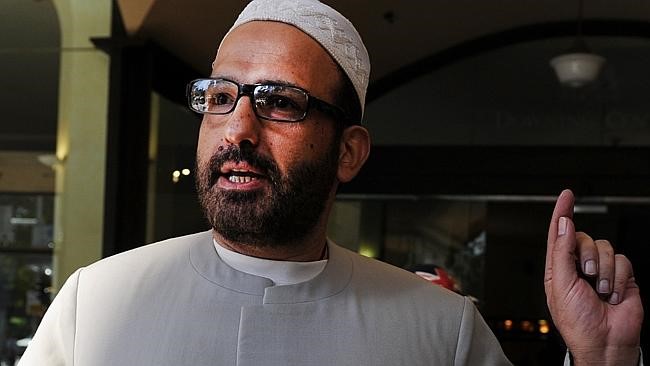
Jerry Gordon: Australians are grief stricken over the tragic hostage standoff with loss of lives and injuries on the early morning of December 16th at the Lindt Café in downtown Sydney. It was perpetrated by an Iranian political refugee, a self-styled Muslim cleric, Man Huron Monis, killed in the police action. Australian PM Tony Abbott suggested the perpetrator Monis was "mentally unstable," was that the case in your professional opinion?
Dr. Michael Welner: The first thing one has to establish in such questions, is:
1) What is the nature of the crime; and
2) How do the perpetrator’s actions relate to his customary behavior and his customary ideas.
Monis declared his allegiance to and influence by ISIS with the first words of his announced hostage-taking, after calmly sitting with other patrons and staff in the Lindt Café without any remarkable behavior. The hostage-taking had little to do with the Lindt Café and more with what was across the street, Channel Seven. This brought Monis instant hyper exposure that then drew in the coverage of other competing news networks, and with that, international news. Monis’ demands principally related to attention from the Prime Minister and acknowledgment of his actions in the name of ISIS. Sheikh Monis (as he was known by other Muslim elders in Sydney who identified him as such) neither killed, demanded money, nor the release of prisoners, nor his own safe passage. After a long standoff in which he injured no hostages, he began falling asleep whereupon he was attacked by a manager who was himself killed by Monis’ gun as they struggled for it. Police intervening in the ensuing chaos then reportedly killed Sheikh Monis and one other hostage.
In October, Canadian Michael Zehaf-Bibeau shot an unarmed Canadian soldier outside a war memorial in Ottawa. Martin Rouleau-Couture ran over an Army officer with his car in Quebec. Both incidents happened soon after ISIS called upon Muslims to take it upon themselves to attack Canadian military and police without seeking the input of others. Both Bibeau and Couture could not get travel permits to leave Canada in order to fight for ISIS in the Middle East. This holiday season, France has seen multiple high-visibility lethal attacks from ISIS loyalists on French Christmas shoppers, again following public calls by ISIS spokespeople for individuals to kill others around them. These incidents reflect killings in which lone killers, without apparent logistic support from an organization, initiated abrupt, murderous attacks. Australia similarly drew exhorting from ISIS spokespeople to Muslims residing there to kill others around them.
Sheikh Monis’ crime, on the other hand, did not kill abruptly. Although his own writings demonstrated a recent pledge to loyalty with ISIS, his was a spectacle crime without murder for many hours. More importantly, Monis’ had a long history of dramatic and attention seeking public behaviors advocating against Australia’s military participation in the Afghanistan conflict. He wrote bitter and angry letters to families of dead Australian soldiers, tasteless to the end of earning him prosecution and conviction. He chained himself in public and claimed to have been tortured by the authorities in connection with his political “peace” advocacy. And so Sheikh (a term meaning a respected elder) at 50 was well known to Australian law enforcement and to media – and had attracted over 14,000 followers on Facebook.
Monis also had a string of sex assault accusations against him by women who claimed he lured them with services that bore no references to his devout Muslim faith. At the same time, less than a year before the Lindt Café hostage incident, he was arrested for collaborating with his girlfriend on setting his ex-wife on fire and killing her. So Monis’ outlandish behavior went beyond the props of whatever Shiite or Sunni garb he donned and touched risk and death to others.
Mental illness is only distinguished as illness because the thinking and behaviors it affects is unwanted and unacceptable to that person when he is in a healthy state.
Monis’ behavior was entirely consistent with a highly attention-seeking personality who reveled in the spotlight that his letter-writing brought him and the platform he assumed that brought him so many followers.
That Australian Prime Minister Tony Abbott deemed Monis mentally unstable was intellectually and factually dishonest. Monis neither evidenced any history of psychiatric hospitalization or treatment. Moreover, his criminal history, like the hostage taking, was deliberate, premeditated, organized, and agenda-oriented. A mentally unstable person, especially following the ISIS-Western murderous proxy script, would have walked into an establishment and killed as many as possible before being himself destroyed. Monis’ actions and history in Sydney demonstrated that he assumed the ISIS designation with aims at a show-trial in which he could emerge as a fluent spokesperson for Islamist entitlement to murderous attitudes toward the West. In my professional opinion, Monis was willing to die, but took a risk that he could ratchet up the drama and emerge an even more visible Muslim activist.
The Prime Minister’s use of the term "mental instability," without specific evidence for same, followed the same marginalizing of Monis as a “self-styled” Sheikh and “self-styled” peace activist. But other Muslims referred to him as Sheikh, and he had many in his ideological cohort, including a devout Muslim girlfriend who lectured in recorded tapes on his website and was willing to engage in femicide in a distinctively Muslim style (immolation) with Monis.
When we otherwise deem behaviors and thinking mentally ill because the rest of us find them unwanted and unacceptable, we use the term "mental illness" the way the Soviet Union once did. Namely, if the state disapproves, it’s mentally ill. While that may serve public policy, it has nothing scientific behind it and is easy to abuse. Worse yet, it stigmatizes the mentally ill because we have more fears of stigmatizing another population.
Read the full article here.
Read past interviews with Jerry Gordon here.


