Recent deliberation in the United States Congress about mental health reform has included discussion of several legislative options. One of these, HR 3717 and authored by Rep. Tim Murphy, is unique in tackling the urgent need to address crisis mental health care, pertinent to homicides, violence and suicides.
A recent Washington Post article by Stephanie McCrummen tells the story of a man’s psychological downward spiral from the vantage points of the ex-wife, the mother, and the father. It paints a picture all too common; hands tied by an illness which robs a person of insight and the desire to obtain help, commitment standards with hard to achieve thresholds and a system of psychiatric care that produces brief, cursory treatment encounters and is disconnected from families who are a necessary part of crisis management. Here, the father spends two years writing his governor, his U.S. senator, and the U.S. Department of Health and Human Services, ending all letters in the same way; “Please help us!!!!!!”.
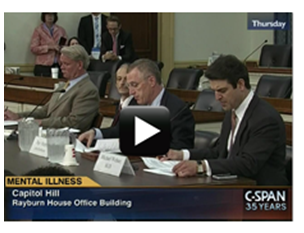 Denial of the contemporary challenges of the mental health system is far reaching. True stories such as that above highlight a systemic problem that can no longer be denied. Dr. Welner, Chairman of The Forensic Panel, testified at Congress recently in strong support of the Murphy Bill, H.R. 3717, because of the specific need to answer these challenges. Reflecting the urgency of families like that depicted in the Washington Post piece, Dr. Welner testified, “This country is full of people who have thought in their head ‘somebody do something please!’”
Recent highly profiled mass murders and the far more common problem of suicides illustrate gaps in crisis mental health because of those with illness who refuse treatment and who are invested in the denial of their risk. The most important fix for the mental health system is to get the specialized crisis intervention to those who, ironically, are so ill that their disturbed insight alone drives them away from competent care. In order to remedy this, according to Dr. Welner, mental health reform must address the following:
1) Involving and empowering family standing in commitment decisions to AOT or hospitals, and in signing off on hospital releases of those involuntarily committed; and
2) Reform of HIPAA to protect doctors’ judgment to involve family in therapeutic crisis management, when hospitalization is not the best option.
“Addressing these points is necessary to a national crisis mental health policy that actually does something, rather than postures so legislators can fool the public into thinking they are doing something,” remarked Dr. Welner. “Only the Murphy legislation has been sincere enough to make adjustments to allow people in crisis and with no insight to get the help that they need, so that preventable tragedies of everyone watching a slow train wreck as poignantly detailed in the McCrummen article stop happening.”
In praising The Washington Post’s coverage of this issue, Dr. Welner added, “it’s essential for us all to call attention to the urgency of crisis mental health, but to know that these problems have a fix that is available. The Murphy Bill is vital to the national interest, and families of the mentally ill, those seeking a better mental health care system, and psychiatrists and psychologists alike must tell their Congressmen, in strongest terms in this electoral season, to pass HR 3717.”


